

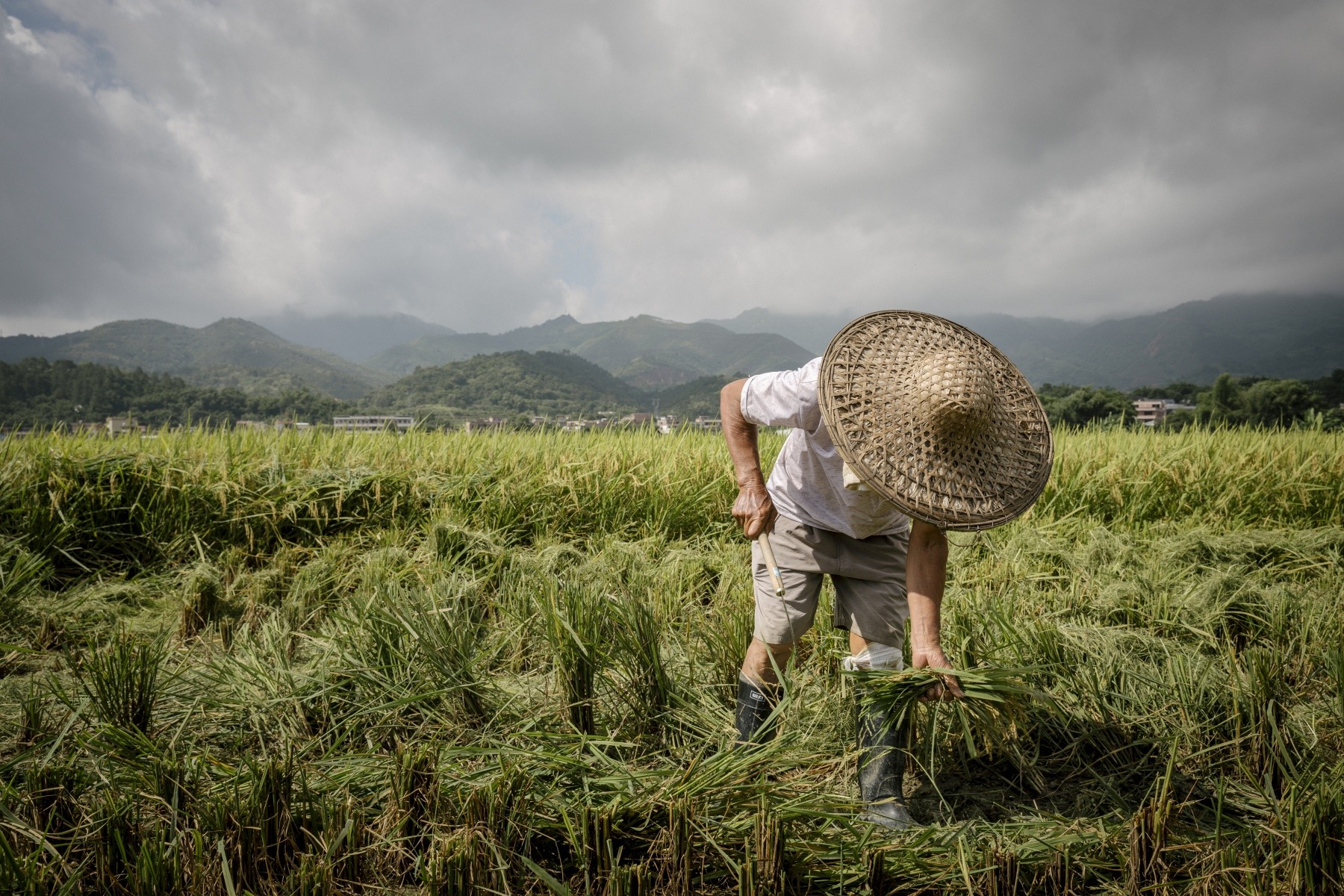

Fertiliser shocks reveal a deeper exposure across food systems, public budgets, businesses and farmer livelihoods.
Authored by Morgan Gillespy, Executive Director of FOLU
A fertiliser shock is also a food-system warning
The current fertiliser shock is exposing a deeper structural vulnerability in global food systems. It is a warning about how exposed food systems have become to volatile energy markets, fragile trade routes, concentrated input supply chains and public support systems that often protect production in the short term, but fail to build resilience for farmers facing an increasing number of shocks.
FOLU’s concern is not the geopolitics of the current crisis. Our concern is what it reveals about food-system resilience. When fertiliser, fuel and shipping costs rise, the effects move quickly through agricultural production costs, farmer decisions, food company margins, public budgets and household food prices. Recent modelling of natural gas, fertiliser and staple crop trade across 208 countries identifies upstream gas and mineral fertiliser supply chains as structural bottlenecks in the global agrifood system. 1
This is the systemic fragility at the heart of the current food model: food production, fossil energy, geopolitics and sovereign fiscal exposure are still too tightly coupled.
Building resilient nutrient systems
Farmers need protection now. Many are already managing higher input costs, climate stress, uncertain markets and limited access to finance. Short-term emergency support will be needed in many places. But the quality of that support matters. If emergency responses simply expand dependency on volatile fossil-fuel-based inputs, they may protect farmers today while increasing their exposure tomorrow.
This is not an argument against fertiliser. Nutrients are the fundamental building blocks of food. Nutrients removed through harvest must ultimately be replaced. The question is not whether nutrients are needed, but how they can be supplied in ways that improve resilience, productivity and environmental outcomes. Today, roughly half of the global population depends on food production linked to fertiliser use, underscoring its critical role in food security. But how fertilisers are produced and used must change to better nourish crops, support farmers and reduce harmful environmental impacts.
That matters for governments. Fertiliser imports and subsidy programmes already place pressure on agricultural budgets and foreign exchange in many countries. When prices spike, governments often face pressure to expand support to farmers. That may be politically and socially necessary, but it can also increase fiscal strain, especially where public debt is high and development finance is under pressure.
It also matters for business. Food companies, traders and processors are exposed when input costs rise, farmer supply becomes less predictable, and raw material prices become more volatile. Businesses that depend on stable agricultural supply chains have a direct commercial interest in investing upstream: in farmer advisory services, nutrient efficiency, soil health, diversified sourcing, local input markets and innovation across value chains.
For many farmers, fertiliser affordability is only one part of the problem. Soil degradation, poor advisory support, limited finance, reliable water supply, weak market access and climate instability all shape whether inputs translate into yields and income. In some places, the challenge is overuse and waste. In others, under-application remains a major productivity constraint. The objective is therefore not to use less fertiliser everywhere, but to optimise nutrient use: reducing waste where nutrients are over-applied, and improving access, advice and soil response where farmers still lack the inputs they need.
This is where the economics become concrete. In Kenya, FOLU country analysis suggests nutrient-use efficiency on smallholder farms may be as low as 20-30 per cent, while declining soil organic matter reduces the ability of soils to retain and cycle nutrients effectively. In India, the fertiliser-to-grain response ratio in irrigated systems is reported to have fallen sharply over recent decades, suggesting that increasing application alone is delivering progressively lower productivity gains in some systems. These are not arguments for abandoning farmer support. They are arguments for making support work better.
Four areas for action
A resilient nutrient system helps farmers maintain and improve productivity while reducing exposure to volatile imported inputs, rebuilding soil function, diversifying nutrient sources, and spreading risk across local, regional and global supply chains. In practice, this means combining efficient fertiliser use, healthy soils, diversified nutrient sources, farmer advisory systems, resilient supply chains and, where appropriate, cleaner nutrient production.
If the challenge is systemic, the response must be too.
First, optimise nutrient use. Globally, nitrogen-use efficiency is commonly below 50 per cent, meaning a large share of applied nitrogen does not end up in harvested crops.2 Soil testing, nutrient mapping, farmer advisory systems, digital tools and more precise application can help farmers improve productivity while reducing waste. Businesses can support this by investing in farmer advisory services, agronomic support, data systems, nutrient-use-efficiency programmes and partnerships that help farmers optimise nutrient management across supply chains.
Second, build diversified soil and nutrient systems. Resilient nutrient systems should draw on a broader portfolio of nutrient sources and soil-management approaches. These may include locally appropriate biological and organic nutrient sources, such as composts, manure systems, crop-residue recycling, legumes and other forms of biological nitrogen fixation, agroforestry, intercropping, soil organic matter restoration and selected microbial products where evidence supports their effectiveness. These approaches should be judged by outcomes: improved soil organic matter, better nutrient cycling, stronger water retention, reduced nutrient losses to air and water, lower input volatility and more stable farmer incomes.
Third, connect food-system transition with industrial transition. Fertiliser production is closely linked to fossil fuels, especially natural gas and coal. Low-carbon ammonia, green hydrogen and cleaner nutrient supply chains can help reduce future exposure to energy shocks, particularly in countries with the industrial base and renewable energy potential to develop them. Cleaner production is not a substitute for farmer-led soil health and nutrient-use efficiency, but it is an important part of a more resilient nutrient system.
Fourth, repurpose public support toward resilience. Fertiliser subsidies are politically sensitive because they are tied to food prices, farmer welfare and national food-security strategies. The goal should not be abrupt removal of support. It should be transition-sensitive reform that protects farmers while gradually shifting incentives to support soil health, integrated nutrient management, better targeting, advisory support, risk-sharing mechanisms and more productive use of public finance. FAO, UNDP and UNEP have estimated that global support to agricultural producers averaged USD 540 billion per year between 2013 and 2018, much of it delivered in ways that can distort prices or create negative social and environmental outcomes, the so-called harmful subsidies.3 The opportunity is to redirect more of that support toward sustainability and resilience, not reduce support to farmers.
Country pathways will look different
There is no single global answer. FOLU Country Platforms and partners are already grappling with different aspects of this challenge, from import exposure and subsidy design to regenerative agriculture, integrated nutrient management and industrial decarbonisation.
In Brazil, fertiliser resilience is both a vulnerability and opportunity. The country’s agricultural competitiveness depends heavily on external inputs, with around 90% of fertilisers used in Brazilian agriculture being chemical and imported. At the same time, Brazil is very well positioned for diversification, with a growing base of biological input adoption and production. As one of the world’s major food producers and exporters, Brazil’s pathway matters beyond its borders and strengthening domestic resilience has implications for global food-system stability.
In China, the agenda connects food security with industrial decarbonisation and nutrient efficiency. A fertiliser system that has historically relied heavily on coal creates emissions, energy-security and resilience challenges. China has nevertheless demonstrated that fertiliser use can be optimised while maintaining productivity, reducing application rates by around 16 per cent between 2015 and 2022 through policy support, innovation, extension services and greater use of organic fertilisers. Its experience highlights the potential to link agricultural transition with cleaner nutrient production and industrial decarbonisation.4
In Colombia, previous fertiliser shocks helped catalyse practical work on bioinputs and farmer training. Working with AGROSAVIA, partners supported farmers to develop and use locally produced biological and organic nutrient sources as part of broader efforts to improve soil health, strengthen resilience and reduce exposure to volatile fertiliser markets.
In Ethiopia, the issue is both agricultural and macroeconomic. Fertiliser imports place pressure on scarce foreign exchange reserves, while rising fuel and shipping costs can increase distribution costs and delay delivery to farmers. A resilient pathway will need to protect farmers from short-term input shocks while strengthening soil health, regenerative approaches, irrigation, advisory systems and regional supply options.
In India, the scale of fertiliser use makes even modest efficiency gains globally significant. Domestic production also remains exposed to imported natural gas, linking food security to energy markets. The priority is not rapid substitution, but improving nutrient-use efficiency, strengthening soil health and expanding the range of locally appropriate nutrient management approaches while protecting farmers through a managed transition.
In Indonesia, the immediate exposure is not necessarily urea, given domestic production capacity. The greater vulnerability may lie in compound fertilisers that depend on imported nutrients and raw materials such as sulphur, phosphates and potash. This points to the need for better data systems, balanced nutrient strategies, farmer advisory services and subsidy design that improves productivity rather than simply increasing input volumes.
In Kenya, fertiliser import dependence, soil degradation, politically visible farmer support and persistent yield gaps create both urgency and sensitivity. The opportunity is to strengthen farmer support by linking it more closely to targeting, soil testing, advisory systems, integrated nutrient management and Kenya’s agroecology and agricultural transformation strategies.
From efficiency to resilience
Efficiency matters, but resilience cannot be built through efficiency alone. It also comes from diversity: diverse farming systems, diverse nutrient sources, diverse supply chains, diverse markets and diverse forms of farmer knowledge.
Farmer-level resilience extends beyond inputs. It depends on access to local and regional markets, reliable water supply, affordable finance, risk-sharing mechanisms, and advisory systems that help farmers make practical decisions under uncertainty. A resilient nutrient system must therefore sit within a wider food-system transition, not apart from it.
FOLU’s role: connecting evidence, countries, business and investment
This is where FOLU can add value. FOLU is not a humanitarian response agency, a fertiliser technical body or a substitute for country-led policy processes. Our role is to connect evidence, country platforms, partners, businesses, donors and finance institutions around practical transition pathways.
We are now exploring a practical concept focused on food-system resilience and fertiliser price volatility. The aim is to work with interested countries and partners to assess exposure, strengthen farmer protection, improve nutrient efficiency, and develop investable pathways for resilient nutrient systems. This could include public finance reform, blended finance for transition support, country-platform delivery partnerships, farmer advisory systems, soil-health measurement, integrated nutrient management, nutrient recovery and recycling, locally adapted organic and biological inputs, sustainable nutrient management and business engagement across value chains.
The current fertiliser shock should not be treated simply as another crisis to manage. It should be treated as a signal that the foundations of food security need to change.
Farmers need support through today’s volatility. Governments need tools that protect food security without creating unmanageable fiscal exposure. Businesses need more reliable supply chains. Donors and finance institutions need investable pathways that reduce risk while improving soil health, productivity, climate resilience and livelihoods.
We can no longer continue to choose between feeding people today and transforming food systems for tomorrow. The future of food security depends on our ability to do both.
With support from FOLU Ambassadors:
Agnes Kalibata, Former UN Special Envoy for the Food Systems Summit and Chair of C4Impact Advisory
Diane Holdorf, Executive Vice President, World Business Council for Sustainable Development
Felipe Villela, Director, Latin America, The Earthshot Prize
Paul Polman, Investor, Author, Philanthropist
Shenggen Fan, Chair Professor, China Agricultural University
Svein Tore Holsether, President and Chief Executive Officer, Yara International
1 Kiparisov, K. and Folberth, C. (2026) Global food-system vulnerability to disruptions in natural gas, fertiliser and staple crop trade. Preprint. Available at: https://arxiv.org/abs/2605.06411
2 Zhang, X., Davidson, E.A., Mauzerall, D.L., Searchinger, T.D., Dumas, P. and Shen, Y. (2015) ‘Managing nitrogen for sustainable development’, Nature, 528, pp. 51–59. https://doi.org/10.1038/nature15743.
3 FAO, UNDP and UNEP (2021) A multi-billion-dollar opportunity: Repurposing agricultural support to transform food systems. Rome: Food and Agriculture Organization of the United Nations. Available at: https://www.fao.org/documents/card/en/c/cb6562en.
4 Zhang, X., Davidson, E.A., Mauzerall, D.L., Searchinger, T.D., Dumas, P. and Shen, Y. (2015).
Managing nitrogen for sustainable development. Nature, 528, 51–59.
https://doi.org/10.1038/nature15743