
Food and land use context in Ethiopia
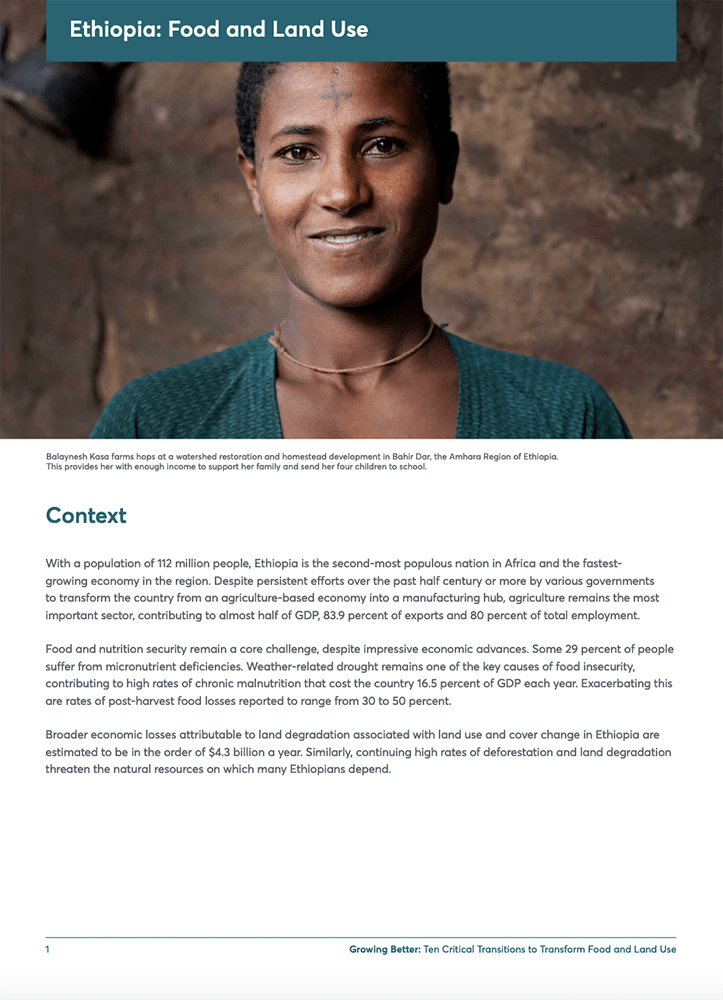
Ethiopia is one of the fastest growing economies in Africa and the continent’s second most populous nation. Despite efforts made by the government to transform the country from an agriculture-based economy into a manufacturing hub, agriculture remains the most important sector, contributing to almost half of the nation’s GDP and 80 percent of total employment.
Food security continues to be a core challenge with nearly 30 percent of people being undernourished. Weather-related drought remains one of the key causes of food insecurity, contributing to high rates of chronic malnutrition that cost the country close to 17 percent of GDP each year.
At the same time, high rates of deforestation and land degradation threaten the natural resources upon which many Ethiopians depend.
FOLU activity in Ethiopia
Formally launched in 2018, the FOLU Ethiopia platform is a vibrant network of experts working to provide support to policymakers and other influential stakeholders at the national and local level. Platform partners include The Policy Studies Institute under Ethiopia’s Planning and Development Commission, the Synergos Institute, the Water and Land Resource Centre at Addis Ababa University, and the World Resources Institute (WRI) Ethiopia.
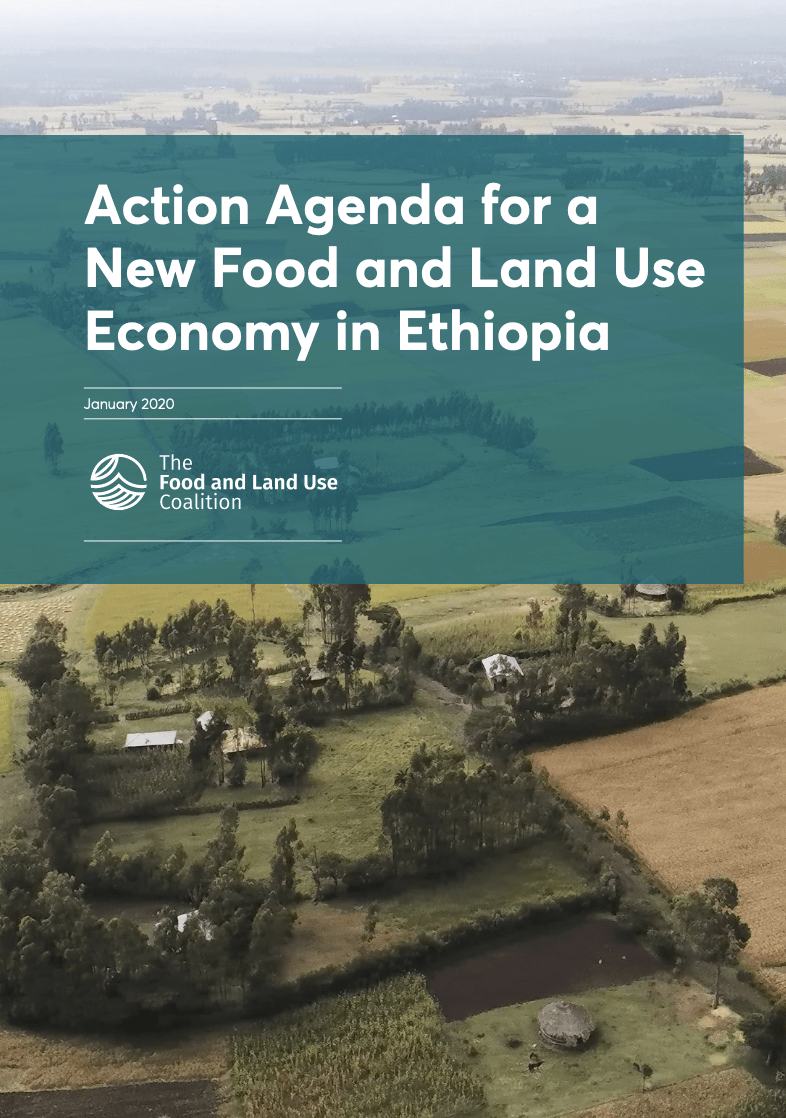
This national coalition has published policy recommendations and actions for a transformed food and land use system in Ethiopia that benefits its people and the environment. FOLU supports the country’s efforts to achieve 1) increased agricultural productivity 2) sustainable resource use 3) restoration and forest protection in rural landscapes 4) and food and nutrition security.
FOLU Ethiopia aims to strengthen the scientific and economic evidence-base for policy reform and demonstrate impact through local pilots and multi-stakeholder approaches. For example, the team has helped identify the necessary financing tools required to catalyze public and private investment in the agriculture and forest sector.
The platform seeks to strengthen and broaden its membership, aspiring to become a strong movement in Ethiopia for all committed to a more sustainable, resilient, equitable and healthy food and land use economy.
Events
Latest news
Tackling post-harvest losses in Ethiopia could alleviate food insecurity for millions while enhancing economic stability…
Learning across Continents: Experts from India and Ethiopia exchange knowledge on sustainable and regenerative agriculture …