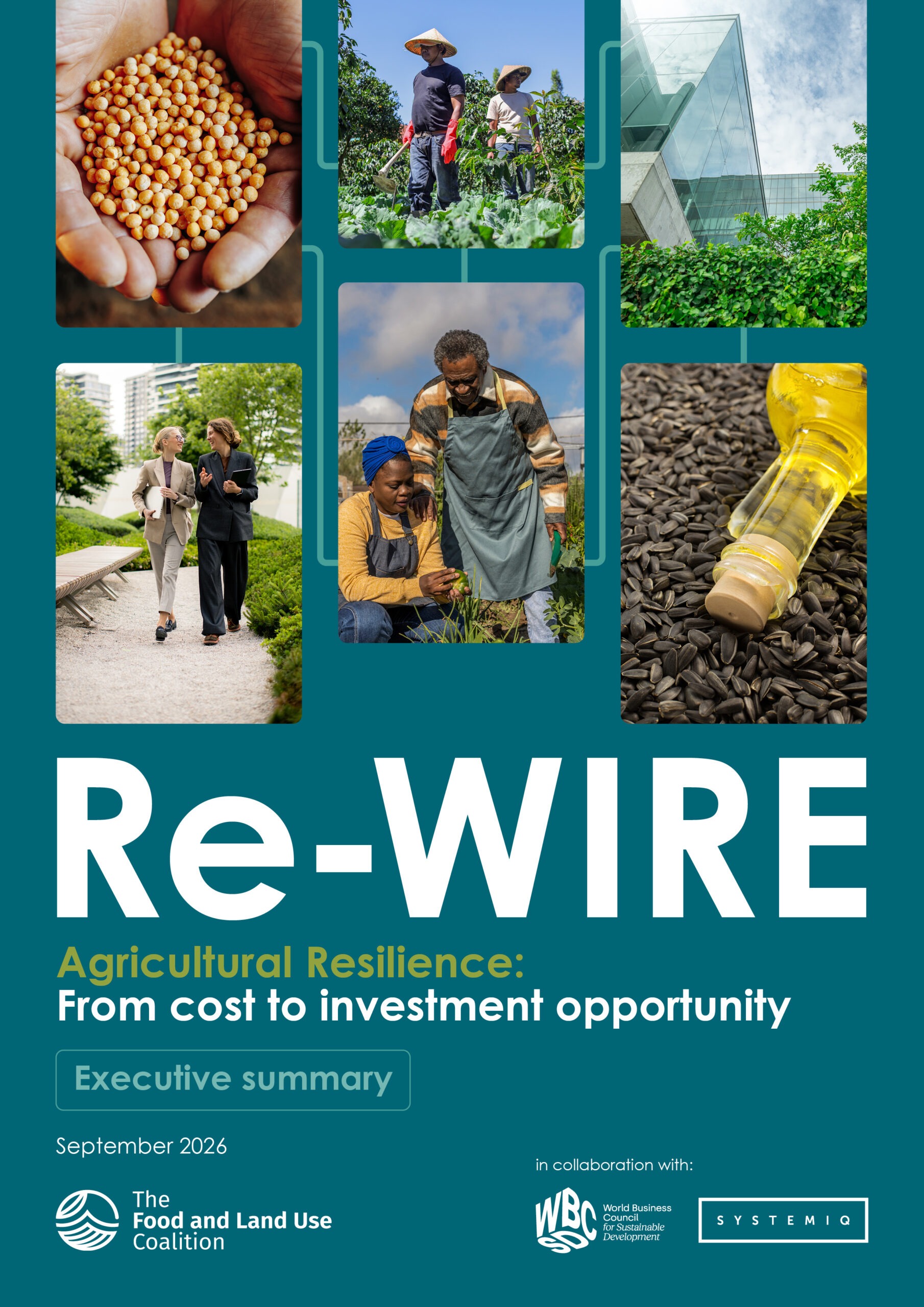
Re-WIRE Agricultural Resilience: From cost to investment opportunity

15 09 26

Agri-food companies, farmers and governments are already paying for the physical impacts of climate and nature on agricultural supply chains, yet the tools used to assess that risk miss most of what actually hits a farm. This report makes the case that better evidence, quantified through catastrophe risk modelling, can turn resilience from a sustainability cost into a bankable investment, but only if companies, governments and financiers build that evidence together.

The Food and Land Use Coalition
FOLU
World Business Council of Sustainable Development
In collaboration with WBCSD
Systemiq
In collaboration with Systemiq
Penny Cross
FOLU
penny.cross@folu.org
Yusra Humayun
WBCSD
humayun@wbcsd.org

Re-WIRE Agricultural Resilience: From cost to investment opportunity

DD MM YY

Agri-food companies, farmers and governments are already paying for the physical impacts of climate and nature on agricultural supply chains, yet the tools used to assess that risk miss most of what actually hits a farm. This report makes the case that better evidence, quantified through catastrophe risk modelling, can turn resilience from a sustainability cost into a bankable investment, but only if companies, governments and financiers build that evidence together.
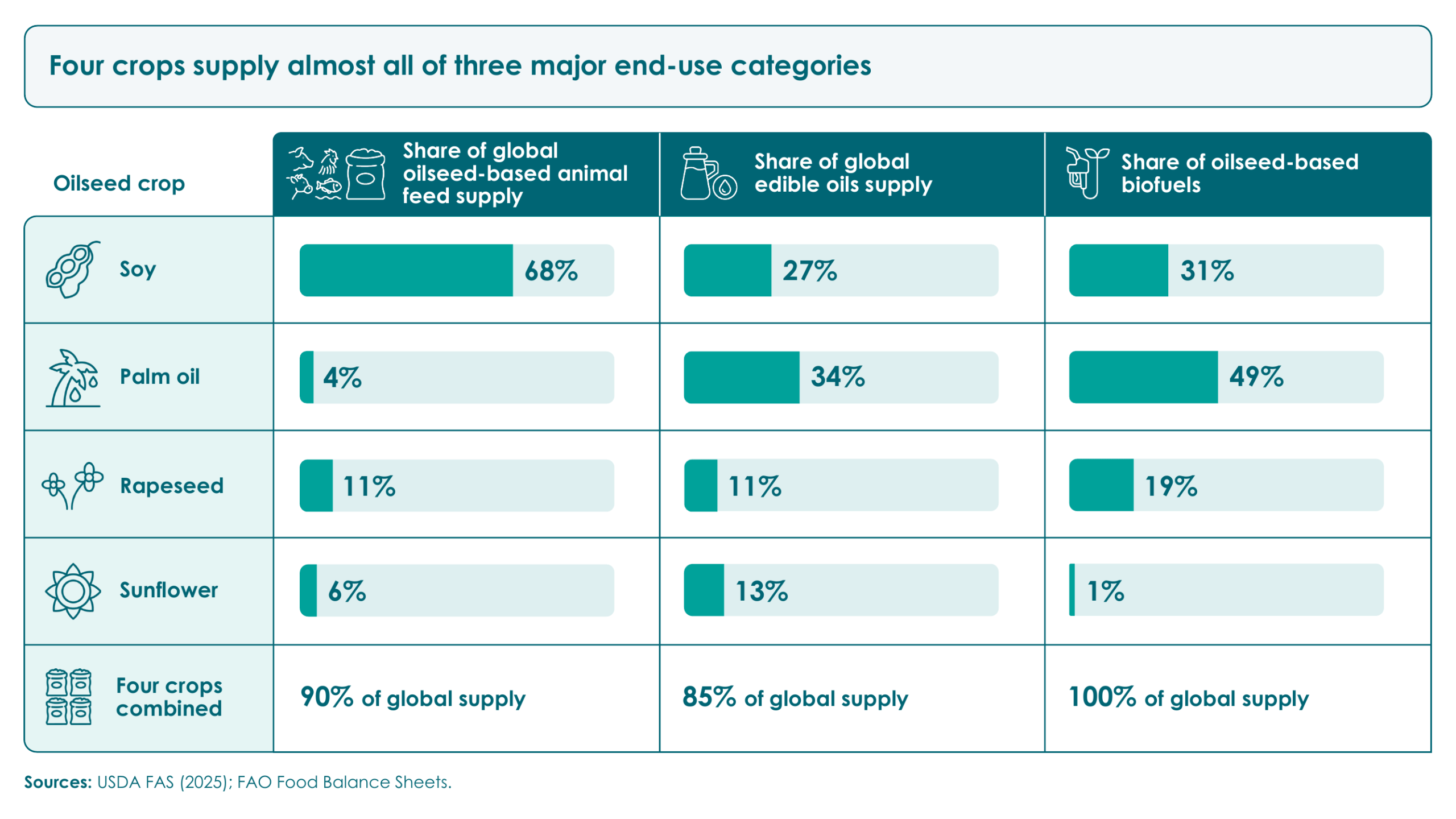
Array, Array, Array, Array Array, Array

Key figures

630
Billion $

estimated annual private finance capacity for the global food system (2023)

19
Billion $

private-sector climate finance currently flowing to agri-food systems each year

1.1
Trillion $

annual climate finance needed for agri-food systems, public and private need combined.

Infographics

Read the report

Translations

Related reports

Download

By providing this information, we're able to improve future reports and insights — resulting in better outcomes for all.
X