



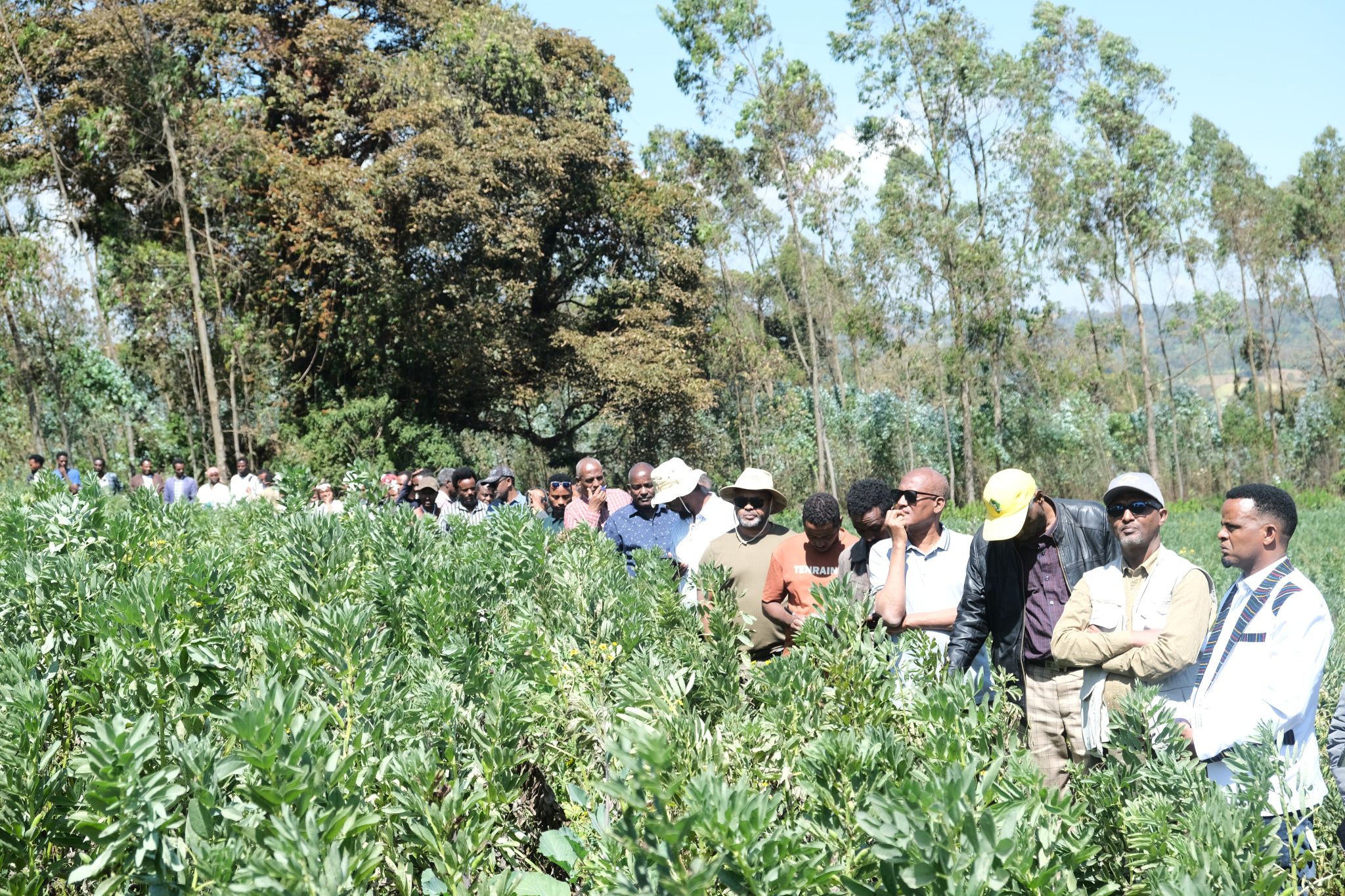
Green Field Day in AnaSora Woreda: Regenerative...
Farmers such as Mr. Zenebe Chalke and Mr. Debeso Sora showed peers that regenerative agriculture is not a theory, but...
 Regenerative Agriculture
 Ethiopia
 Go back
“Today, we stop watching our wealth rot. Today, we start building the Nyandarua our farmers deserve.”
On 27 November 2025, Nyandarua County made history in Kenya, becoming the first county in the country—and a pioneer in East Africa—to adopt a comprehensive five year Food Loss and Waste (FLW) Reduction Action Plan. The plan directly targets an estimated KES 7.8 billion lost each year across Nyandarua’s dairy, potato and vegetable value chains – more than the county’s annual development budget. This was after a participatory and inclusive process involving a diverse group of actors to capture the context-specific realities and community needs to inform evidence-based interventions and coordinated actions to tackle FLW while enhancing sustainable resource use, livelihoods and food system resilience.
The plan unites county government, national ministries, researchers, farmers, private sector and development partners around a shared goal: to halve food loss and waste by 2030, in line with Sustainable Development Goal (SDG) target 12.3.
 Today, we stop watching our wealth rot. Today, we start building the Nyandarua our farmers deserve.
Kenya produces enough food to feed its population, yet an estimated 9–10 million tonnes are lost every year before reaching consumers. Still, one in four Kenyans remains food insecure. Food loss and waste – driven by inefficient supply chains, poor transport infrastructure, weak postharvest handling, inadequate storage, climate change impacts and inefficient markets – sits at the heart of this paradox.
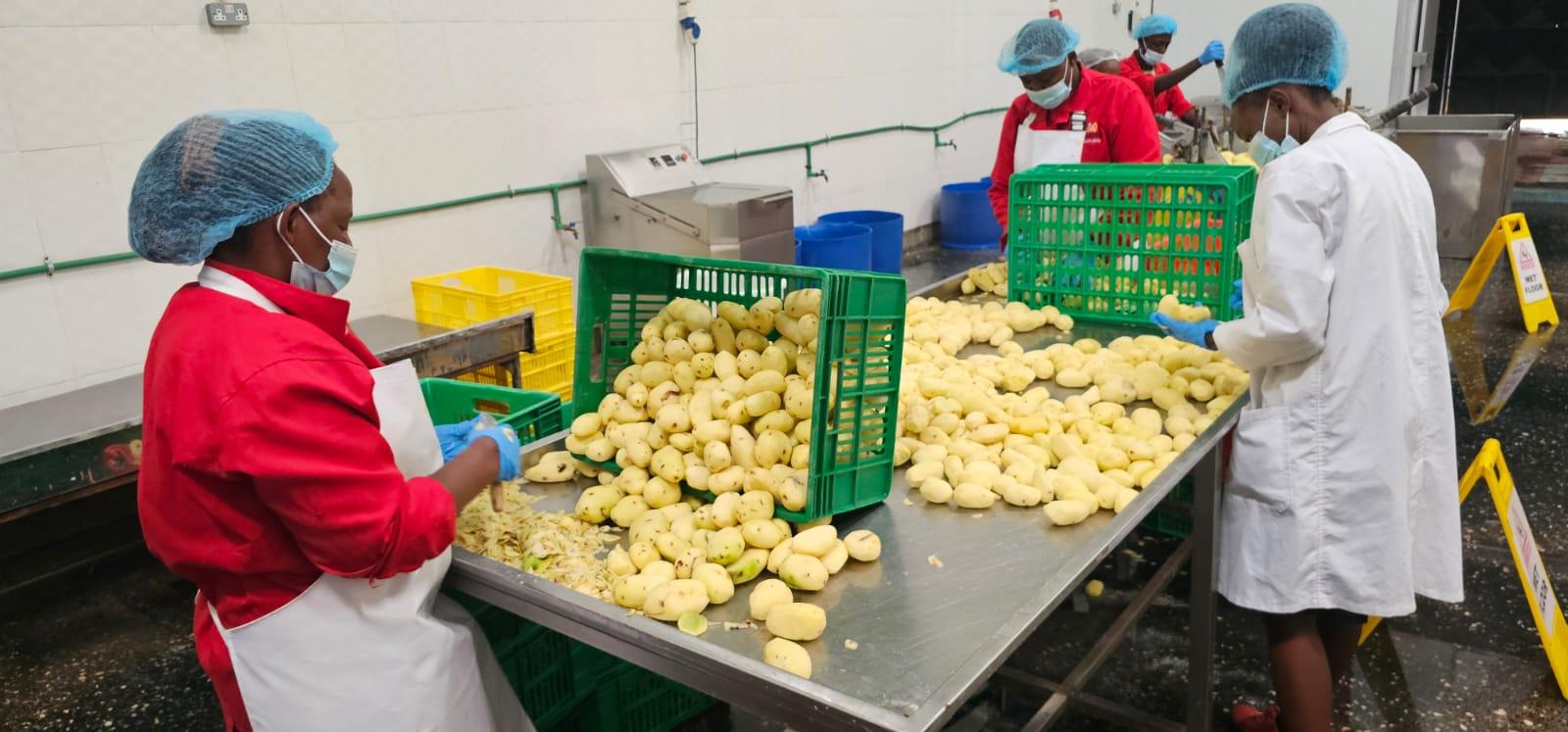
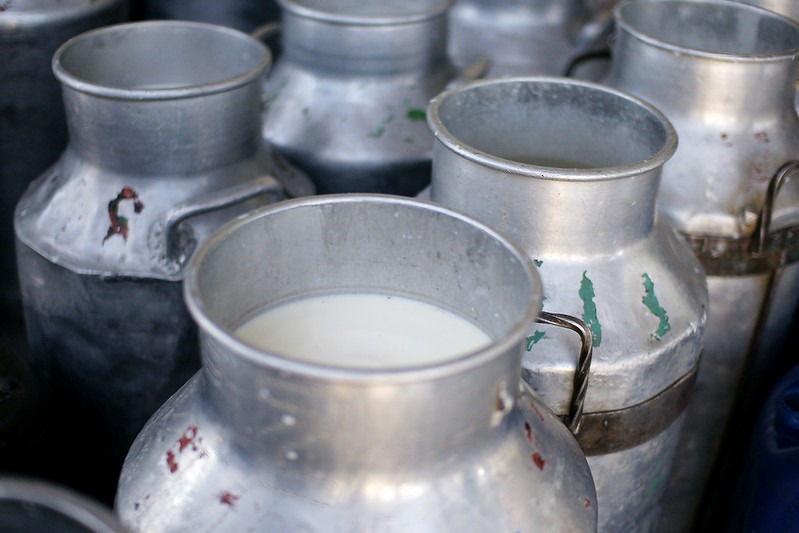
Nyandarua, one of the country’s key agricultural hubs, produces large quantities of milk, potatoes and vegetables, but loses KES 7.8 billion annually to FLW. Smallholder farmers suffer most, losing between 15% and 40% of their harvests before they reach markets.
Until 2025, no county in Kenya had a coordinated, data-driven approach to tackle FLW at scale. Kenya’s Postharvest Food Loss and Waste Reduction Management Strategy (2024–2028) existed at national level, but lacked county level operationalisation. Nyandarua stepped forward to turn this national ambition into concrete local action.
Reducing food loss and waste is one of the most powerful levers for creating healthier, more resilient, and more sustainable food systems. It requires no new farmland. No additional water. No more fertiliser. Just smarter systems that value every kilogram of food produced
The FOLU Kenya Platform played a central role in convening and advocating for the development and launch of Nyandarua’s FLW Action Plan. Key contributions included:
The Action Plan is organised around five pillars:
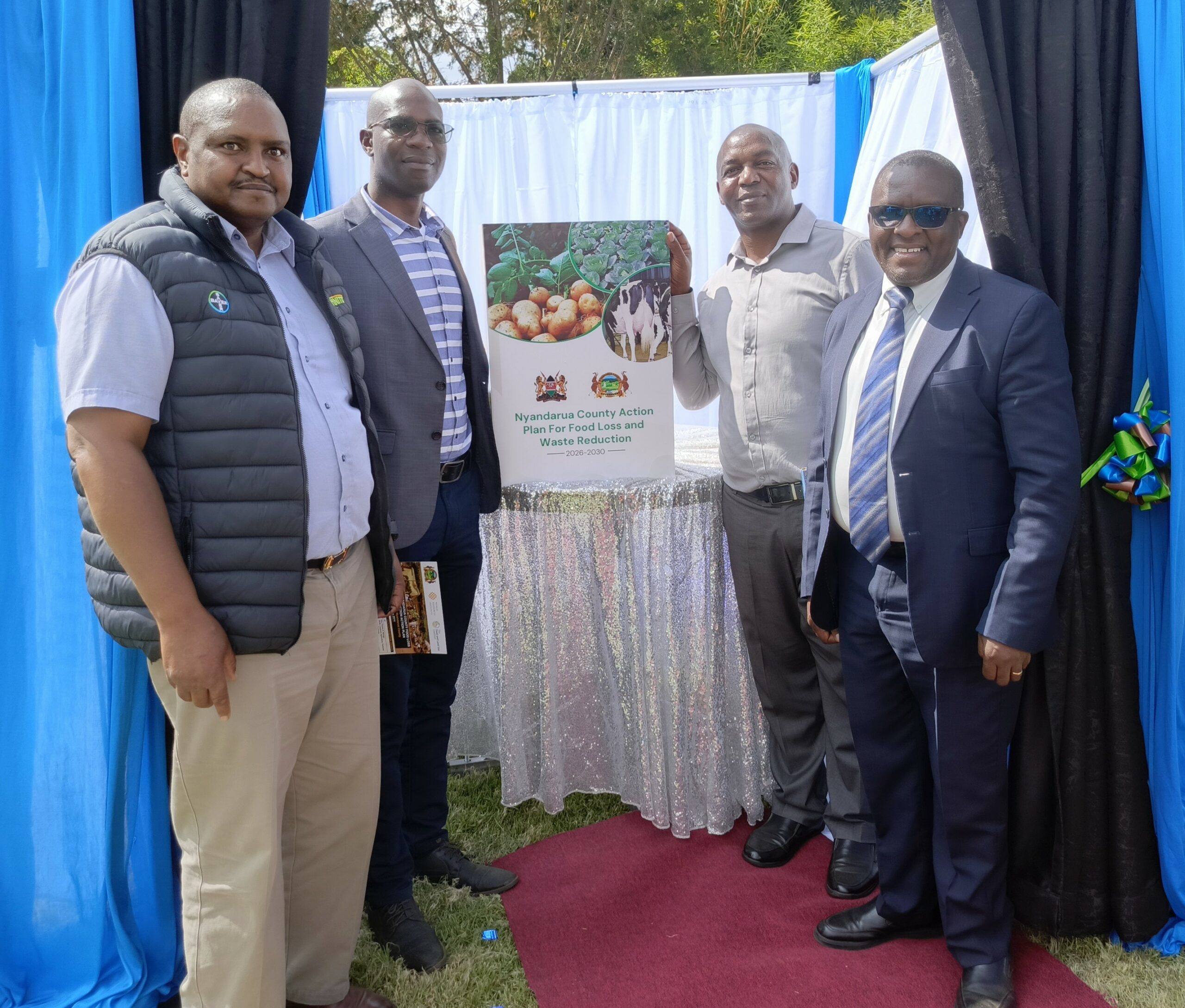
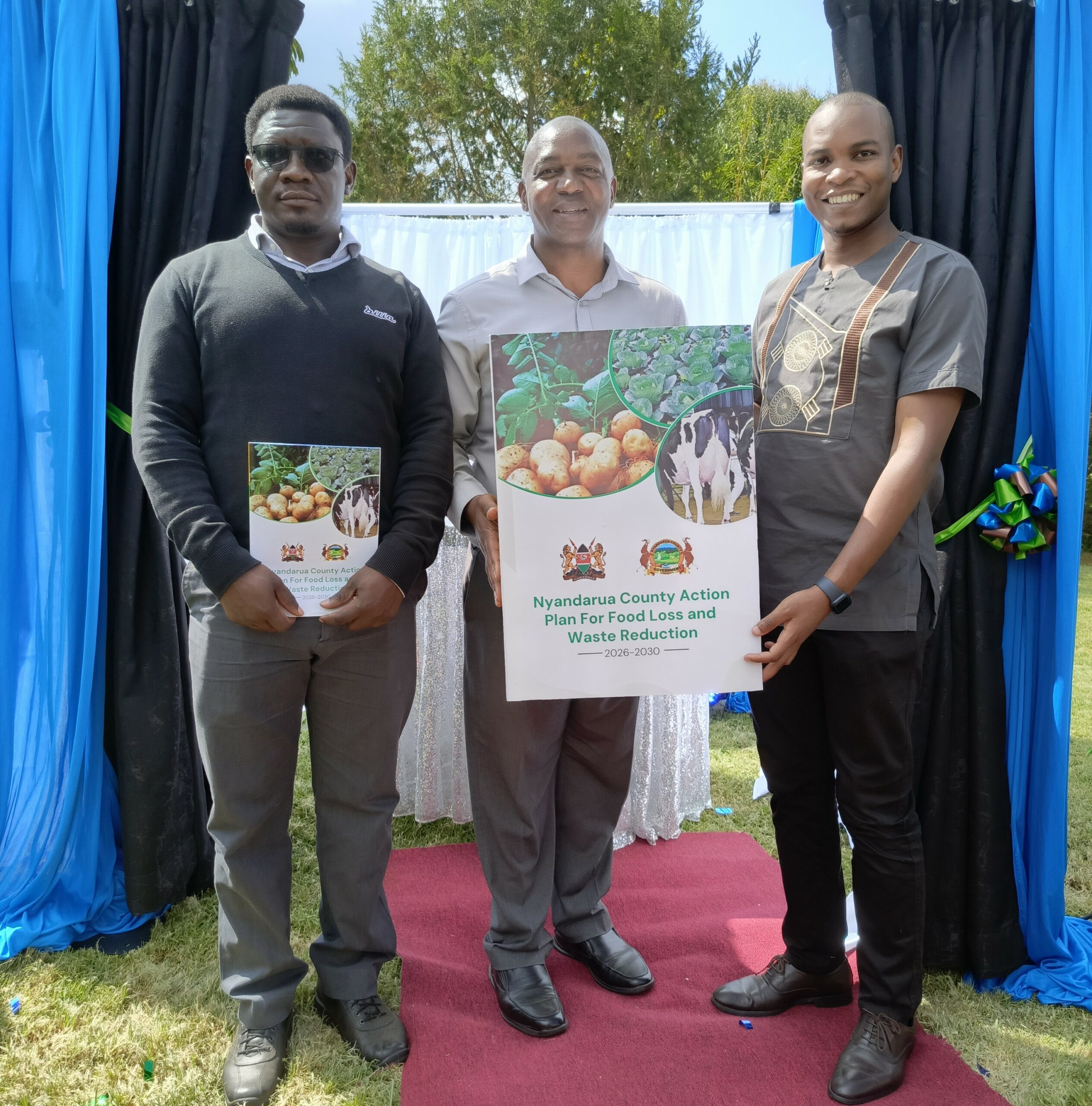
From left to right: Joseph Muriuki (County Government of Nyandarua), Victor Otieno (Research Associate-WRI), Michael Onchabo (FOLU-Kenya Director) and Francis Miringú, Nyandarua CECM-Agriculture, Livestock & Fisheries during the launch of Nyandarua County Action Plan on Food Loss and Waste Reduction © FOLU Kenya
Nyandarua’s FLW Action Plan is a policy milestone: the first comprehensive county level FLW plan in Kenya, and among the first in East Africa, directly advancing SDG 12.3.
If the plan is fully implemented and even half of current losses are recovered, up to KES 4 billion could be redirected into the local economy
In the potato sector, improved postharvest handling has already shown the potential to reduce losses from 40% to 10%
The economic potential is significant. If the plan is fully implemented and even half of current losses are recovered, up to KES 4 billion could be redirected into the local economy – creating jobs especially for women and youth, prosperity, increasing farmers’ incomes and supporting community development. In the potato sector, improved postharvest handling has already shown the potential to reduce losses from 40% to 10%.
The plan also delivers climate co-benefits. Cutting food loss and waste is one of the most cost-effective climate actions, lowering agricultural emissions for resilient food systems and environmental sustainability.
Nyandarua’s approach provides a model that other counties in Kenya can follow. The Ministry of Agriculture and Livestock Development has affirmed that the county’s plan will guide national policy, with Kiambu, Muranga, Nakuru, Kakamega, Kilifi, Makueni, Homabay and Meru counties already recognised as early candidates for adaptation.
A key learning is that durable FLW reduction depends on embedding targets into governance and budget cycles, not treating them as one-off projects. The governance and institutional pillar of Nyandarua’s plan is widely seen as its most vital innovation.
The Nyandarua FLW Action Plan, developed between 2023 and 2025 and to be implemented from 2026 to 2030, clearly reflects FOLU’s Phase 3 priorities. By uniting county leadership, national institutions, research organisations, academia, civil society, farmer groups and development partners around a shared plan, Nyandarua is turning a national strategy into systemic change on the ground – and guiding the way for counties across Kenya to follow.
Note: We acknowledge the support of the Governments of Denmark, Sweden, Netherlands and Norway towards the development of Nyandarua FLW Reduction Action Plan.