

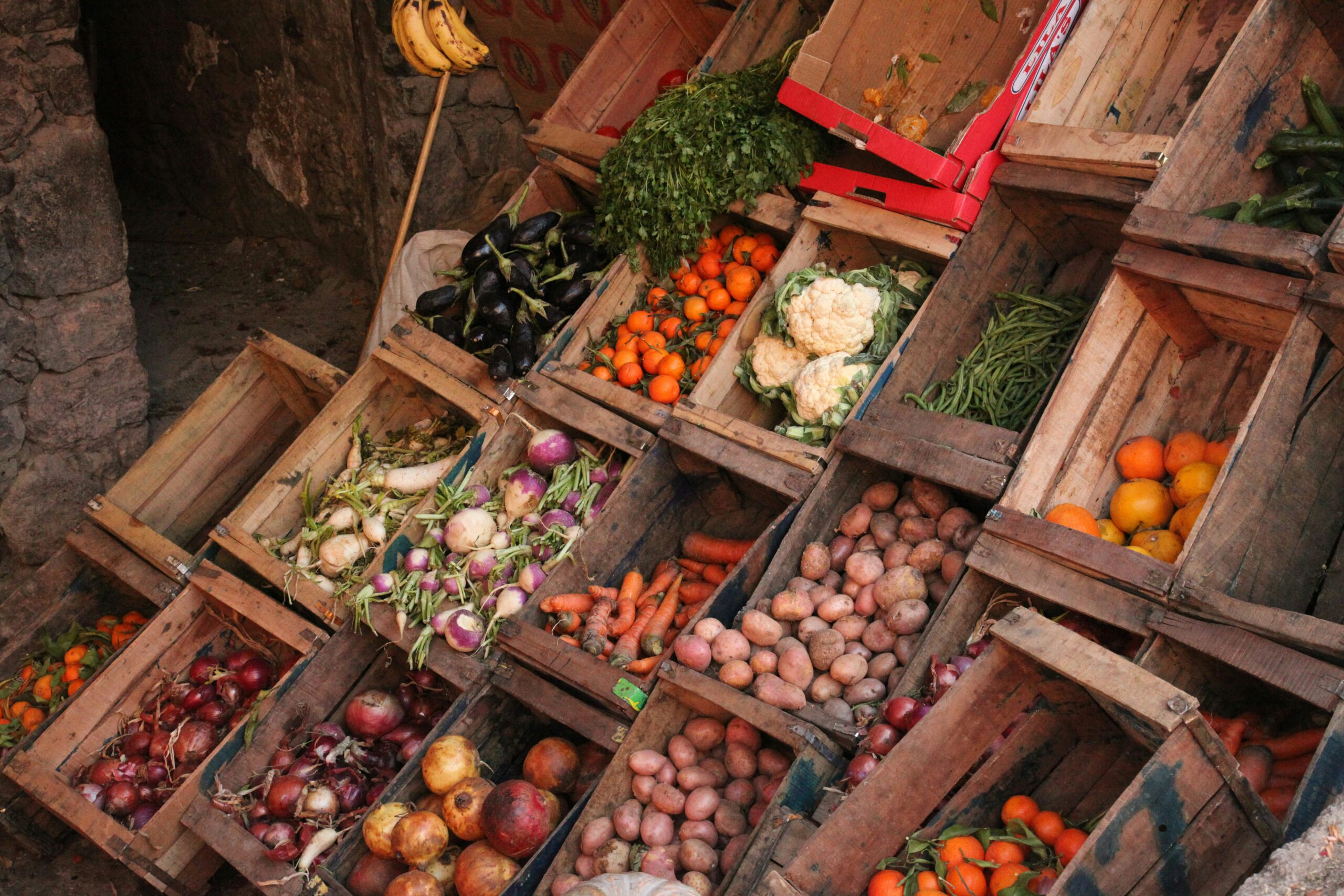

“Over peaches and avocado on toast we had a candid conversation that left me convinced that the food system is approaching a moment of reckoning that businesses and investors are not yet prepared for”.
Authored by Paul Polman, FOLU Ambassador
During London Climate Action Week, I had breakfast with thirty leaders from banks, investors, commodity traders, input companies and food manufacturers. Over peaches and avocado on toast we had a candid conversation that left me convinced that the food system is approaching a moment of reckoning that businesses and investors are not yet prepared for.
Let me start with the numbers, because they frame the problem clearly. First, investment in climate and nature mitigation in the food system is around a tenth of what’s needed – $95billion against an estimated annual need of $1.1 trillion. Second, despite the fact that $8.6 trillion of private finance supports the food system, only $19billion of existing annual investments are coming from the private sector. Yet since 1991, climate-related hazards have cost the global food system $2.9 trillion in agricultural value, and on the current course this number is set to increase.
There is a discomforting gap between what standard climate risk models say and what a growing number of authoritative voices are warning. Standard climate-focussed yield risk models place material agricultural disruption in the 2040s and 2050s, and many companies are rationally planning against that horizon. But earlier this year, a UK government intelligence assessment found every global critical ecosystem on a pathway to collapse, with UK food security at risk without intervention. In April 2025, a group of around twenty anonymous senior food industry insiders warned, through the Inside Track memo, of ‘a moment of threat to food security like none other we have seen,’.
At this breakfast, organised by the Food and Land Use Coalition (FOLU) Re-WIRE programme, and partners Systemiq and the World Business Council for Sustainable Development (WBCSD), we sat with the discomfort provoked by these warnings and discussed two reasons why capital is not moving, despite the risk of inaction.
The first is that many of the tools available today give an incomplete picture of the risk, so companies are planning against the wrong risk baseline. Current physical risk assessments systematically undercount the hazards already affecting supply chains. They miss correlated and compound shocks across regions, the years when drought hits Brazil, the United States and Canada simultaneously. They miss cascading downstream effects. And they almost entirely ignore nature-driven risks: pollinator loss, soil degradation, the feedback loops between deforestation and rainfall. EU agriculture alone faces €28 billion in annual average weather-related losses, with 70–80% currently uninsured. These are not future scenarios. They are the present reality, measured inadequately.
The second hypothesis is about market structure. Even when companies understand the risk, conventional market structures do not give them a reliable way to capture the return on resilience investment. A company that funds farm-level resilience, such as cover cropping, watershed restoration and improved irrigation, reduces risk across an entire producing region. With supply contracts typically running eighteen months or less, the benefits diffuse to the whole market before the investing company can hold them. The return for farmers is real. The returns for downstream companies and investors are harder to capture.
What the room told us
What struck me most about the conversation was the appetite to move. The room largely agreed on the problem, and leaders from finance, from the input sector, from major food manufacturers are not waiting for permission. They are looking for the evidence base and the investment models that would let them go further and faster.
The session reinforced a tension I sit with often. Most companies are not failing to act solely because they lack information. The case for action is already strong enough to demand more courage than we are collectively showing. But it is also true that the information companies need to make a capital decision at the scale required does not yet exist in the right form.
The discussion surfaced three things in particular. First, a strong consensus that a global data commons approach is needed to build trusted, shared, decision-grade risk data that no single company can or should build alone. Second, that the investment case needs concrete archetypes: defined models showing how specific intervention packages work with specific capital stacks to make returns investable for value chain companies, banks and governments. Third, that this is a political challenge as much as a technical one. First movers will disengage without stronger policy signals that others will follow, and the economic benefit to farmers needs to be front and centre alongside the case for downstream companies.
What comes next
Re-WIRE is building the evidence that closes this gap, starting with oilseed crops. A first paper, setting out the conceptual case, will be published in September. A second, focused on the Brazil-China soy corridor, will follow with quantified risk and returns analysis.
This is not only a private sector challenge. The same evidence gap that limits corporate investment limits government action too. Policymakers cannot justify redirecting spending from reactive disaster relief toward prevention without quantified loss data. Better risk evidence changes the calculus for both. And the data infrastructure we need is a public goods problem that requires public solutions alongside private ones.
The food system must become more resilient. The question is whether that happens by design, through investment decisions made now, or by necessity, after shocks that force the issue. The leaders in that room on Wednesday are choosing design. I hope many more will join them.
Paul Polman is a FOLU Ambassador and former CEO of Unilever. Re-WIRE is a programme of the Food and Land Use Coalition, delivered in collaboration with Systemiq and WBCSD. To find out more or get involved, contact Morgan Gillespy at Morgan.Gillespy@folu.org