
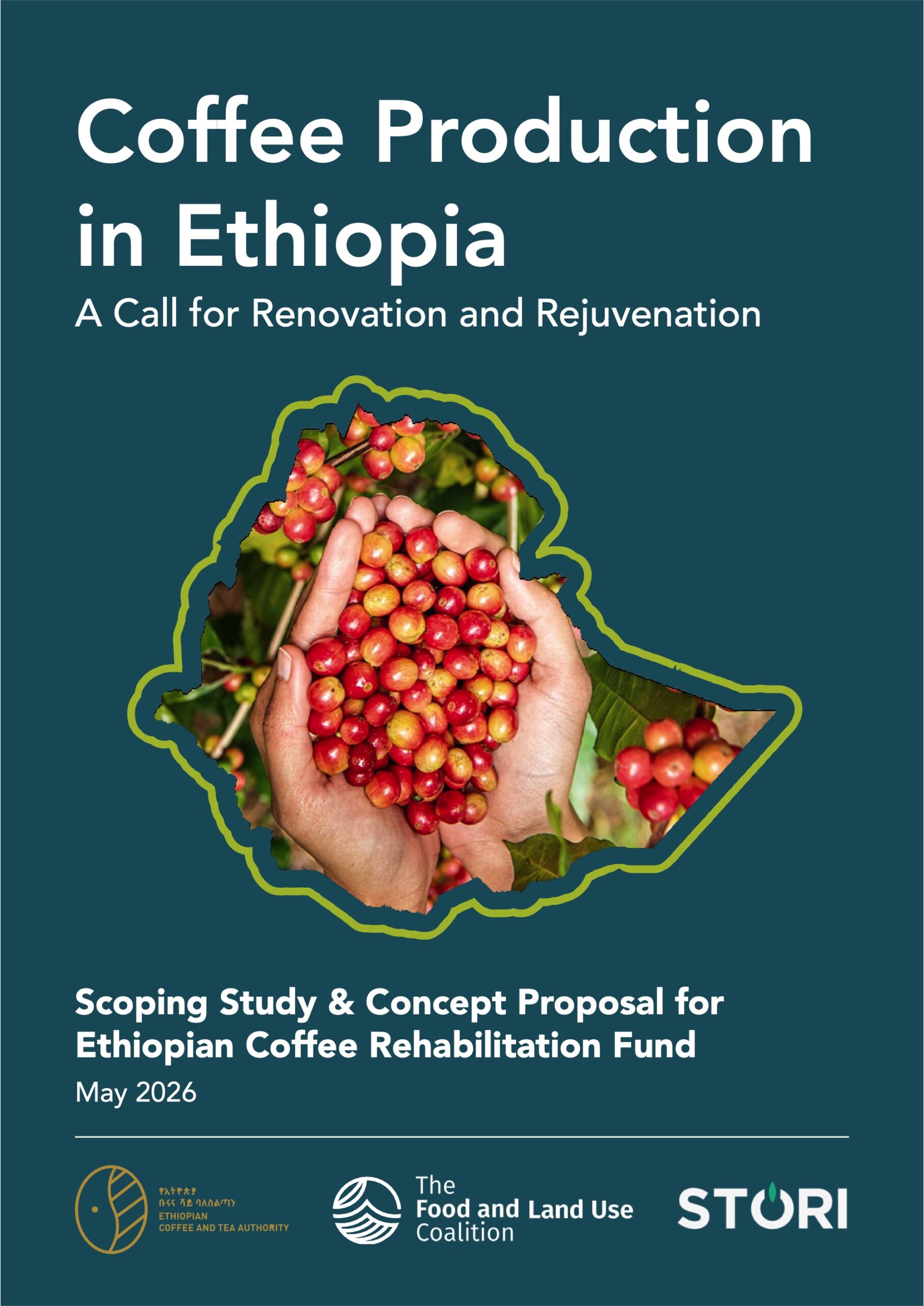
Coffee Production in Ethiopia: A call for renovation and rejuvenation
20 07 26
Ethiopia’s coffee sector is at a critical juncture. As the birthplace of Arabica coffee and a cornerstone of the national economy, coffee supports the livelihoods of millions of smallholder farmers and generates a significant share of the country’s export earnings. Yet the sector faces mounting challenges, including aging coffee trees, declining productivity, climate change impacts, pests and diseases, and limited access to long-term finance for rehabilitation and renewal. Addressing these challenges is essential to sustaining Ethiopia’s position as a leading global coffee producer while improving the resilience and prosperity of farming communities.
The Coffee Production in Ethiopia: A call for renovation and rejuvenation – Scoping Study and Concept Proposal for the Ethiopian Coffee Rehabilitation Fund examines these challenges and presents a pathway for revitalizing the sector through targeted investment in coffee renovation and rehabilitation. Drawing on extensive stakeholder consultations, field evidence, and sector analysis, the report assesses productivity, socio-economic, and financing constraints affecting coffee production. It explores options for establishing a dedicated financing mechanism capable of supporting long-term sector transformation. The study proposes the Ethiopian Coffee Rehabilitation Fund as a vehicle for mobilizing resources, coordinating stakeholders, and facilitating strategic investments that can enhance productivity, strengthen farmer livelihoods, and increase climate resilience.
Produced under the leadership of the Ethiopian Coffee and Tea Authority (ECTA), the report was prepared by the Food and Land Use Coalition (FOLU) Ethiopia and Stori, with financial support from Norway’s International Climate and Forest Initiative (NICFI) and the Norwegian Agency for Development Cooperation (Norad). The study serves as a foundation for collective action among government institutions, development partners, financial institutions, private sector actors, and coffee stakeholders working toward a sustainable and prosperous future for Ethiopia’s coffee sector.
The Coffee Production in Ethiopia: A call for renovation and rejuvenation – Scoping Study and Concept Proposal for the Ethiopian Coffee Rehabilitation Fund examines these challenges and presents a pathway for revitalizing the sector through targeted investment in coffee renovation and rehabilitation. Drawing on extensive stakeholder consultations, field evidence, and sector analysis, the report assesses productivity, socio-economic, and financing constraints affecting coffee production. It explores options for establishing a dedicated financing mechanism capable of supporting long-term sector transformation. The study proposes the Ethiopian Coffee Rehabilitation Fund as a vehicle for mobilizing resources, coordinating stakeholders, and facilitating strategic investments that can enhance productivity, strengthen farmer livelihoods, and increase climate resilience.
Produced under the leadership of the Ethiopian Coffee and Tea Authority (ECTA), the report was prepared by the Food and Land Use Coalition (FOLU) Ethiopia and Stori, with financial support from Norway’s International Climate and Forest Initiative (NICFI) and the Norwegian Agency for Development Cooperation (Norad). The study serves as a foundation for collective action among government institutions, development partners, financial institutions, private sector actors, and coffee stakeholders working toward a sustainable and prosperous future for Ethiopia’s coffee sector.
Ethiopian Coffee and Tea Authority
ECTA
The Food and Land Use Coalition
FOLU
Stori
media contacts
FOLU Global Communications
comms@folu.org
Download








© 2026 The Food and Land Use Coalition. All rights reserved. Privacy policy. Website by Geist*Studio